
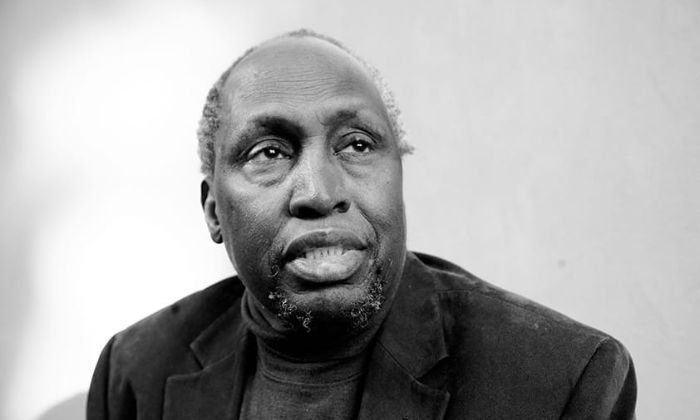
There is a story that follows Ngugi wa Thiong’o the way a shadow follows a walking man. Held in a Kenyan prison without trial, denied paper and pen, he wrote a novel on sheets of toilet roll, smuggling sentences past his jailers one coarse square at a time. The detail sounds almost too neat to be true, yet it holds the whole shape of the man. Take away his freedom and he reached for words. Take away his English and he reached for Gikuyu. Whatever was withheld, he answered with language.
The Boy Named James
Born in 1938 in Kamiriithu, in the highlands north of Nairobi, he came of age inside the contradictions of a settler colony. He was schooled in English, baptised into a borrowed faith, and handed the name James. His early novels carried that name on their spines. Weep Not Child arrived in 1964 as the first English language novel published by an East African, and A Grain of Wheat followed, weighing the cost of independence with a sober and unsentimental eye.
A Vow Made in His Mother’s Tongue
Then came the turn that defines him. He shed the name James, stepped away from the church, and made a vow that would shape the rest of his work. He would write his fiction and his plays in Gikuyu, the language his mother spoke, rather than the language of the empire that had governed his childhood. The decision was not a gesture. It was an argument, carried out in practice across decades, that a people who surrender their language slowly surrender the right to imagine themselves.
Prison Paper and the Long Exile
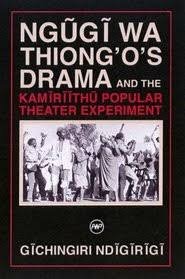
His community theatre project in Kamiriithu, performed by ordinary farmers and workers, alarmed the state enough to land him in detention in 1977. From that cell came Devil on the Cross, written on the only paper available to him. When he was released he found himself unwelcome at home, and the long years of exile began, carrying him to lecture halls in Britain and the United States while his books travelled back into Kenya by quieter routes.
The Memory Bank of a People
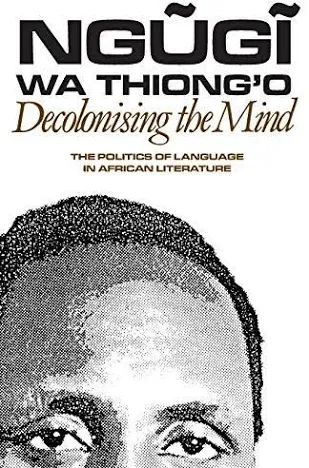
Decolonising the Mind, published in 1986, gathered his thinking into a single clear blade. Language, he insisted, is not merely a tool for saying things. It is the memory bank of a people, the place where their values and their history are stored. To teach a child that her own tongue is unfit for serious thought is to begin a quiet theft that can last a lifetime. Few writers have stated the case with such plainness, and fewer still have lived it so completely.
He remained a perennial name in conversations about the Nobel Prize, honoured across continents, translated into dozens of languages, and read by students who first meet him as a set text and later return to him as a guide. He continued writing and teaching into his final years, and his death in 2025 closed a life that had refused, from its first defiance to its last, to be told in anyone else’s words.
The Question He Leaves Behind
What he leaves behind is not only a shelf of novels and essays. It is a question he set before every African writer who came after him. In whose language do you dream, and who taught you to dream there. The question is uncomfortable because it is honest, and it will keep asking itself long after the man who first posed it has gone quiet.