
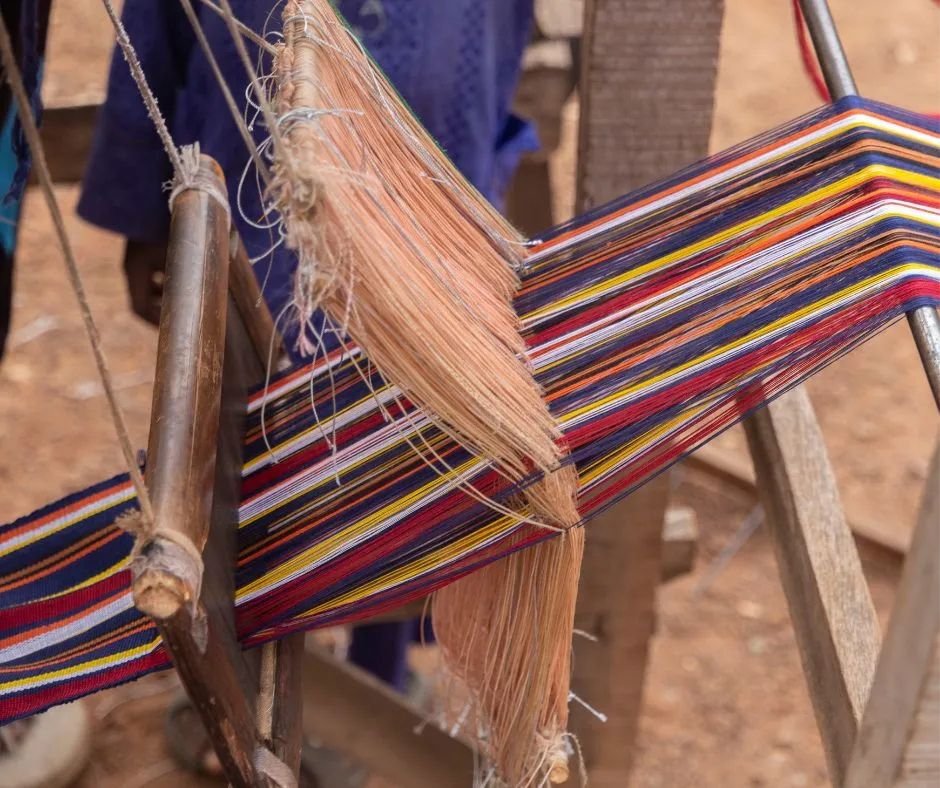
Aso Oke translates directly to “prestigious” or “top” clothing, the cloth from the hinterland, and the name tells you most of what you need to know about its standing. This traditional Yoruba handwoven fabric is used to make some of the most luxurious garments in West Africa, among them the agbada, the flowing wide sleeved robe of intricate patterned embroidery worn by men for ceremony and festival, the gele, the dramatic headwrap so recognisable across the diaspora, and the iro, the women’s wraparound usually accessorised with the gele. The cloth itself is made from spun yarn woven on looms, the yarn drawn from cotton and sometimes from the cocoons of a wild moth known as anaphe, and during the weaving the weaver works a spindle, the orun, with the hands to create the signature designs and patterns in varying colours, which is why there are so many types of aso oke.
Alaari, Etu, and Sanyan
The three major types each carry their own character. Alaari takes its strong crimson red from cloth dyed in red camwood, woven with shining threads alongside locally grown or synthetic cotton, sometimes appearing in perforated patterns and sometimes made from dyed cotton in various colours. Etu is predominantly indigo dyed cotton, carrying a dash of light blue and tiny white stripes, its earliest versions holding a substantial portion of sanyan silk. Sanyan is the duller of the three, a predominantly grey brown cloth marked by longitudinal white stripes, and unlike the others it is traditionally made purely from the silk yarn drawn from the anaphe cocoon.
Four Pieces for Her, Four for Him
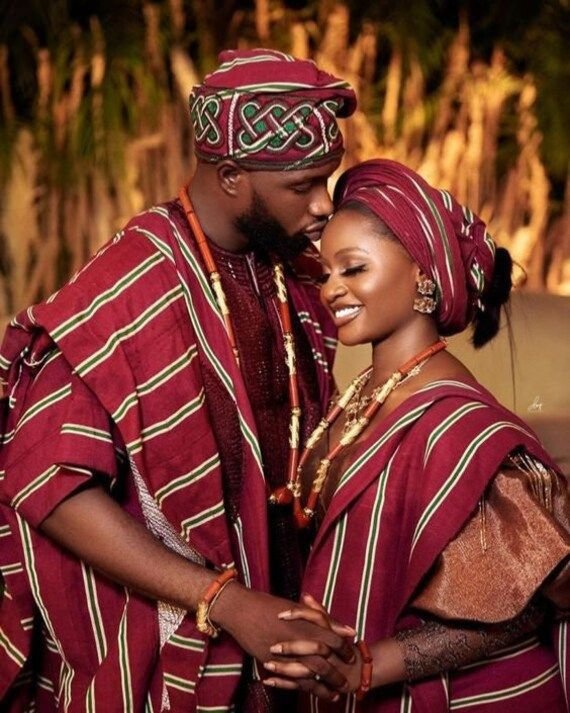
These three, among other types, make up most traditional Yoruba attire for both women and men. The women’s garment usually comes in four parts: the buba or upper blouse, the iro or wrap skirt, the gele headwrap, and the iborun or ipele, the complementary shawl draped over one shoulder. The men’s agbada, whose name means voluminous attire, is likewise a four piece, the awosoke or big loose ankle length outer robe from which the whole outfit takes its name, the awotele or undervest, the sokoto or trousers, and the fila or hat.
Colour as Declaration
The wide array of designs, patterns, and colours does more than offer choice. It carries meaning. In Yoruba culture, purple, red, and indigo are associated with luxury and glamour, so cloths dyed in them are highly prized, and traditionally certain patterns and designs were assigned specifically to women’s or men’s garments. In contrast, the sheer amount of fabric in a single garment, together with the patterns used, signals the wearer’s wealth. The Yoruba adorn themselves in aso oke for the occasions that matter most: weddings and funerals, tribal ceremonies and holidays, and the crowning of chiefs, and it is worn too for religious reasons by followers of the Yoruba faith. It also serves as a commemorative cloth, the aso ebi, worn in matching solidarity to show cooperation and shared belonging during festive periods. In every form, aso oke remains what its name promises, a prestigious cloth that turns the act of dressing into a declaration of culture, status, and pride.