
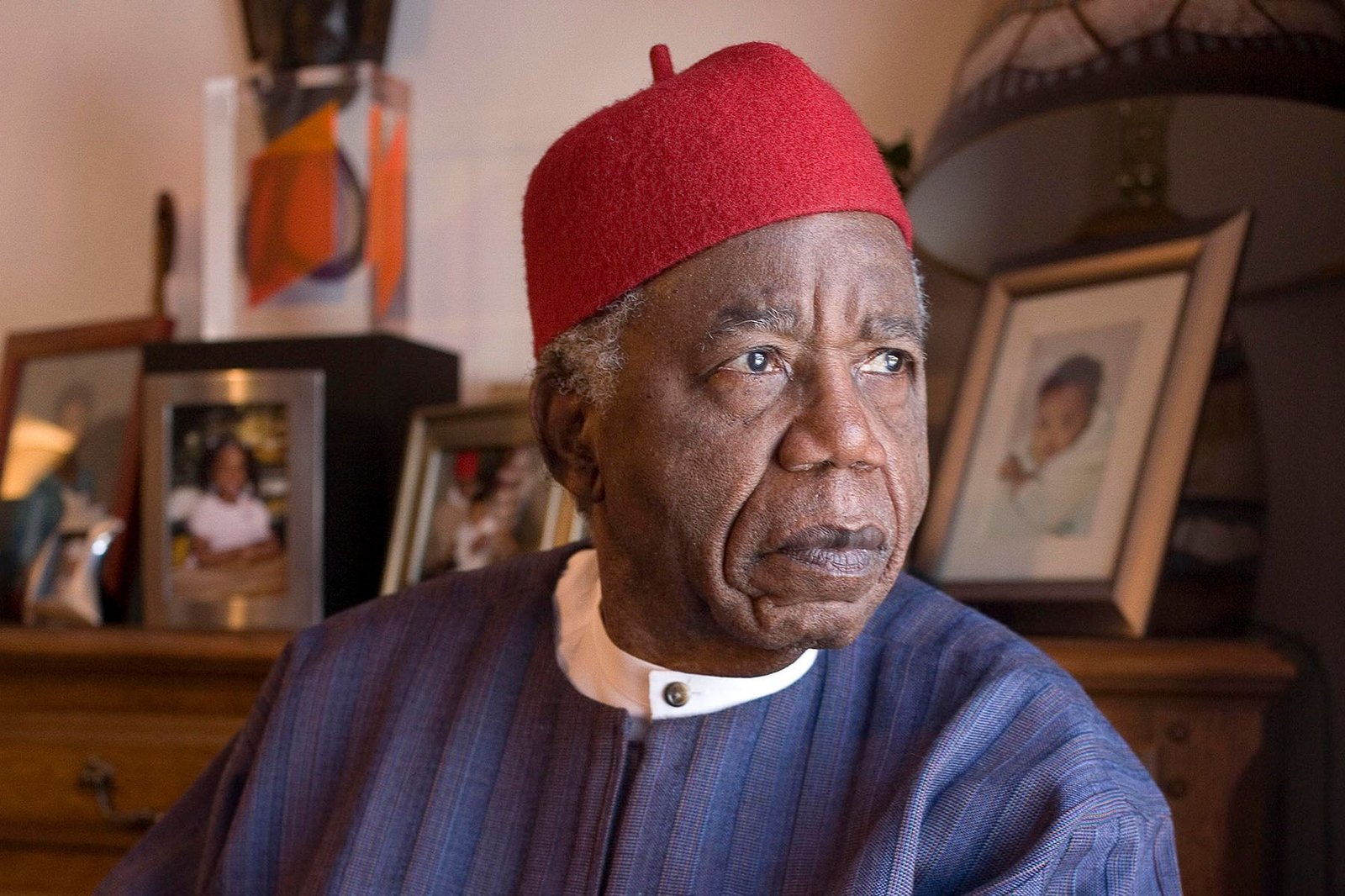
When Things Fall Apart appeared in 1958, it did something that no argument or protest had quite managed. It let an African village speak in its own register, with its own proverbs and its own sense of order, and it placed that world on the same shelf as the European novels that had long described Africa from the outside. Chinua Achebe did not raise his voice to do this. He told the truth as his people knew it, and the ground shifted under a whole tradition of writing about the continent.
Between the Old Religion and the New Church
He was born in 1930 in Ogidi, in what is now southeastern Nigeria, into an Igbo family poised between the old religion and the new church. That doubleness ran through everything he wrote. He understood the dignity of the world his grandparents inherited. He understood the forces that came to unsettle it, and he refused to flatten either into a simple story of heroes and villains.
A Complete Society on the Page
Things Fall Apart follows Okonkwo, a proud and rigid man whose strength becomes his undoing as colonial administration and missionary faith arrive in his community. The novel is often taught as a tragedy, and it is, but its deeper achievement is quieter. It renders a complete society, with laws and humour and contradiction, so that the reader feels the weight of what is lost rather than being told to mourn it. The book has since sold many millions of copies and been translated into dozens of languages, and it remains the most widely read African novel ever written.
Achebe did not stop there. No Longer at Ease and Arrow of God extended his portrait of a society under pressure, and his later work turned toward the disappointments of independence, the corruption and the broken promises that followed the lowering of colonial flags. A Man of the People read the warning signs so accurately that a military coup seemed almost to confirm its pages.
Who Holds the Pen
He was also a fearless critic. His essay on Joseph Conrad challenged the celebrated novel Heart of Darkness for reducing Africa to a backdrop for European anxiety, and the piece remains one of the most discussed acts of literary criticism of the last century. Achebe was not interested in scoring points. He was interested in who holds the pen, and in what happens to a people when others insist on holding it for them.
The Grief He Carried and the Road He Cleared
The Nigerian civil war marked him deeply. He served the Biafran cause, watched a generation suffer, and carried that grief for the rest of his life, returning to it near the end in a measured and painful memoir. A car accident left him using a wheelchair for his later decades, yet his influence only widened. He taught, he mentored, and he became for many readers the very definition of the African writer as a steady moral presence.
He died in 2013, honoured across the world and claimed with pride at home. The phrase a writer once used for him still fits. He was the man who gave the African novel its first fully confident voice. Everything that followed, every younger novelist who writes from inside African experience rather than for an outside gaze, walks on a road that Achebe cleared with patience and with grace.