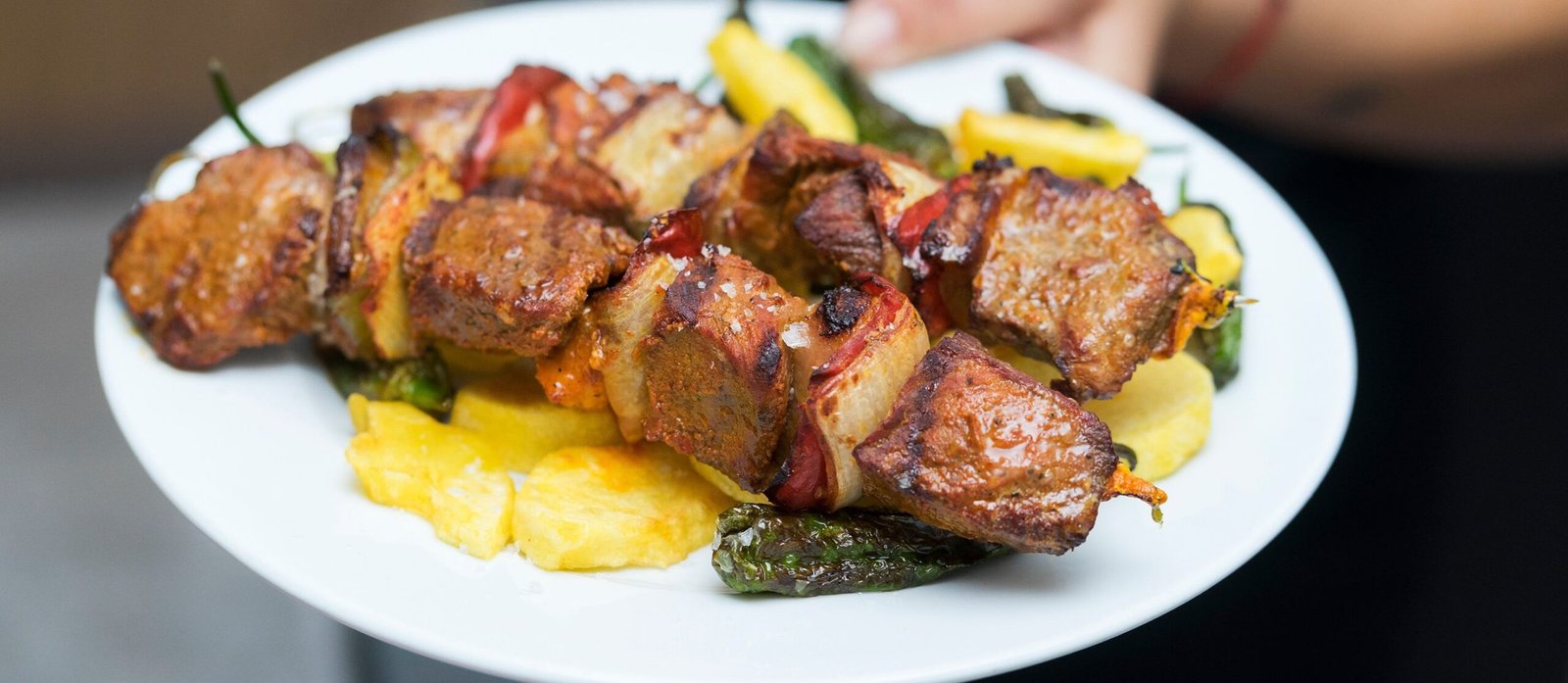
As dusk settles across neighbourhoods in Rwanda, the air takes on a familiar scent—wood smoke, char, and a gentle sweetness carried on heat. It drifts from roadside grills and small bars where conversation gathers before the night fully arrives. You notice it before you see it: skewers held close to flame, turned with practised ease, meat darkening at the edges. This is brochette, not announced as a speciality so much as lived through the evening.
Brochette enters Rwandan life quietly. It is not framed as an event dish or preserved for a ceremony. It appears where people pause—after work, on weekends, during football matches, at family-run bars that serve as social anchors. To understand brochette is to understand how Rwandans occupy time together: unhurried, attentive, grounded in place.
Where Brochette Comes From
The idea of meat on a skewer is widely shared across Central and East Africa, but Rwanda’s brochette has settled into its own rhythm. Goat, beef, chicken, and occasionally fish are common, chosen as much by availability as preference. The cuts are generous, not shaved thin, and the skewer becomes a way of holding substance rather than spectacle.
Historically, brochette aligns with Rwanda’s culture of communal eating and small-scale hospitality. Grilling meat outdoors, close to where people gather, keeps food visible and accountable. Nothing is hidden. You watch the fire, the turning, the browning. In towns and villages alike, brochette sellers become known figures, recognised by consistency rather than flair.
An Everyday Social Food
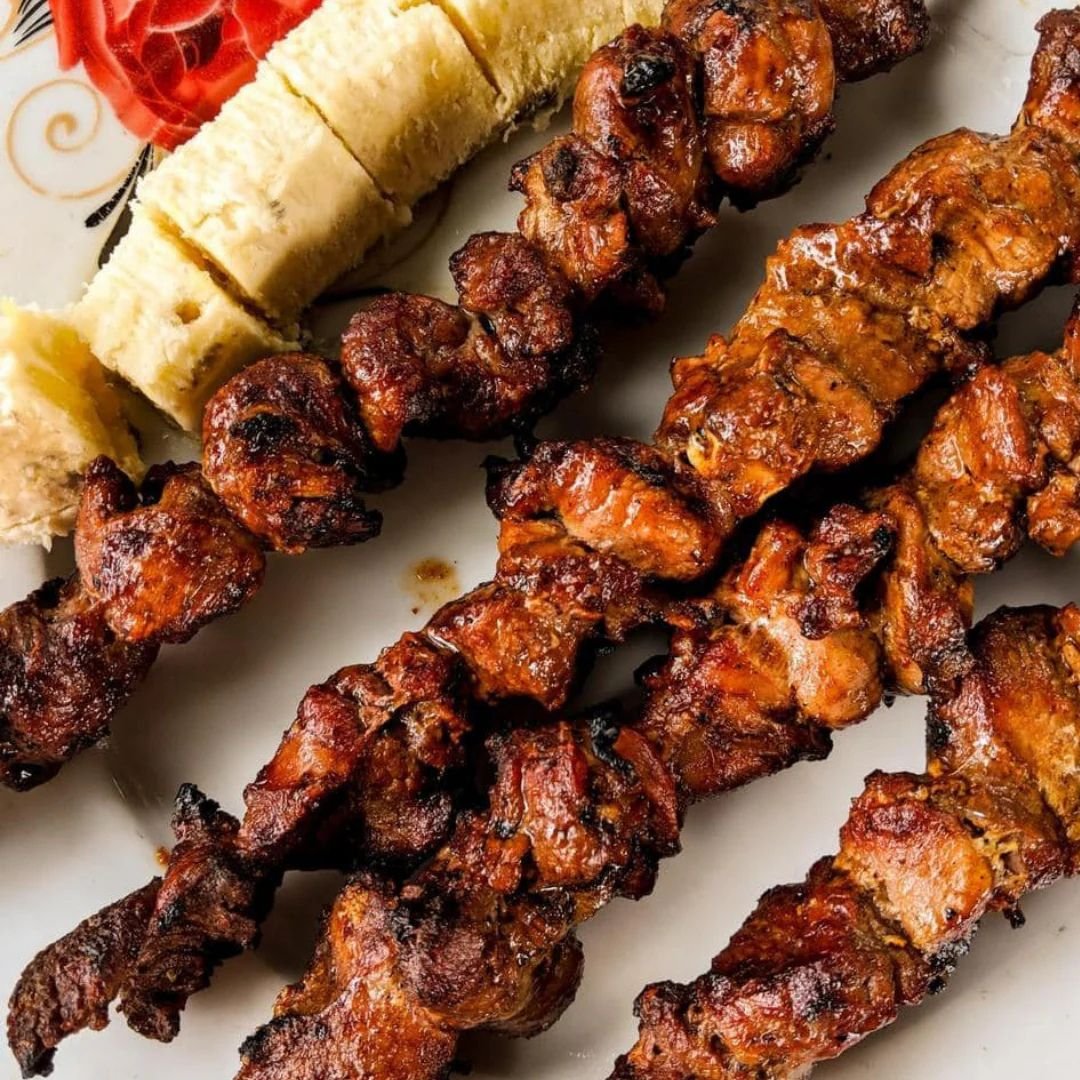
Brochette is rarely eaten alone. It is ordered in twos or threes, placed at the centre of a table, shared alongside fried potatoes or ripe bananas pulled from oil until their edges are crisp. Hands move naturally between the plate and the skewer. Conversation flows in pauses between bites.
The dish belongs equally to informal bars in Kigali and to roadside grills along regional highways. In each setting, it functions as a social equaliser. Office workers, taxi drivers, students, and elders occupy the same benches, eating the same thing, at the same pace. Brochette does not distinguish status; it reinforces proximity.
Technique as Knowledge, Not Instruction
The preparation of brochette is guided less by written method than by feel. Meat is cut thick enough to stay tender over heat. Marinades are mixed by instinct—tomato, onion, garlic, salt, pepper, and heat brought together until balanced rather than measured. The mixture rests with the meat long enough to deepen flavour, but never so long that it overwhelms texture.
Grilling is attentive work. Skewers are turned frequently, brushed lightly with leftover marinade, and kept close to the flame without surrendering to it. The goal is not uniform perfection but a sequence of textures: char at the edge, softness within. This knowledge is passed hand to hand, often learned through repetition rather than explanation.
Brochette in Contemporary Rwanda
Today, brochette remains unchanged in spirit even as its settings evolve. In Kigali’s expanding food scene, it appears alongside bottled beer and televised matches, still priced to invite rather than exclude. In diaspora kitchens, it travels with Rwandans abroad, adapting to new grills and ingredients while retaining its logic of shared eating.
What has endured is not a strict formula but a way of being together. Brochette accommodates substitution and variation without losing identity. It is resilient because it was never rigid.
A Quiet Measure of Continuity
Brochette endures because it asks little and gives much. It requires time, attention, and the willingness to gather. In return, it offers warmth, familiarity, and the assurance that some things do not need reinvention to remain relevant. Around a small grill, as smoke curls upward and skewers turn, Rwanda’s social life continues—steady, unremarked, and deeply present.