
Before arriving in Namibia, my mental picture leaned toward extremes — dust, dunes, and distance. Windhoek unsettles that assumption quietly.
The city does not announce itself. It sits instead in a basin, held between the Auas and Eros mountain ranges, contained by geography and shaped by history. Namibia’s capital and largest city, Windhoek is modest in scale by African standards, yet deliberate in character. Known locally as AiGams — a reference to the area’s natural hot springs — Windhoek moves at a measured pace, one that allows observation rather than urgency.
German colonial architecture, post-independence civic buildings, and contemporary commercial structures coexist without theatrical contrast. The result is not visual drama, but legibility. Windhoek is easy to read.
THE CITY’S SHAPE & ENERGY
Windhoek is a city best understood on foot, at least in its central districts. Independence Avenue and Robert Mugabe Avenue form the civic spine, connecting ministries, museums, cafés, and daily commerce.
Movement follows the sun. Mornings are purposeful, afternoons slow beneath the heat, and evenings gather in predictable pockets — hotel terraces, familiar bars, long-established restaurants. The city’s energy is administrative rather than commercial, social rather than performative.
TOURIST ATTRACTIONS & CULTURAL ANCHORS


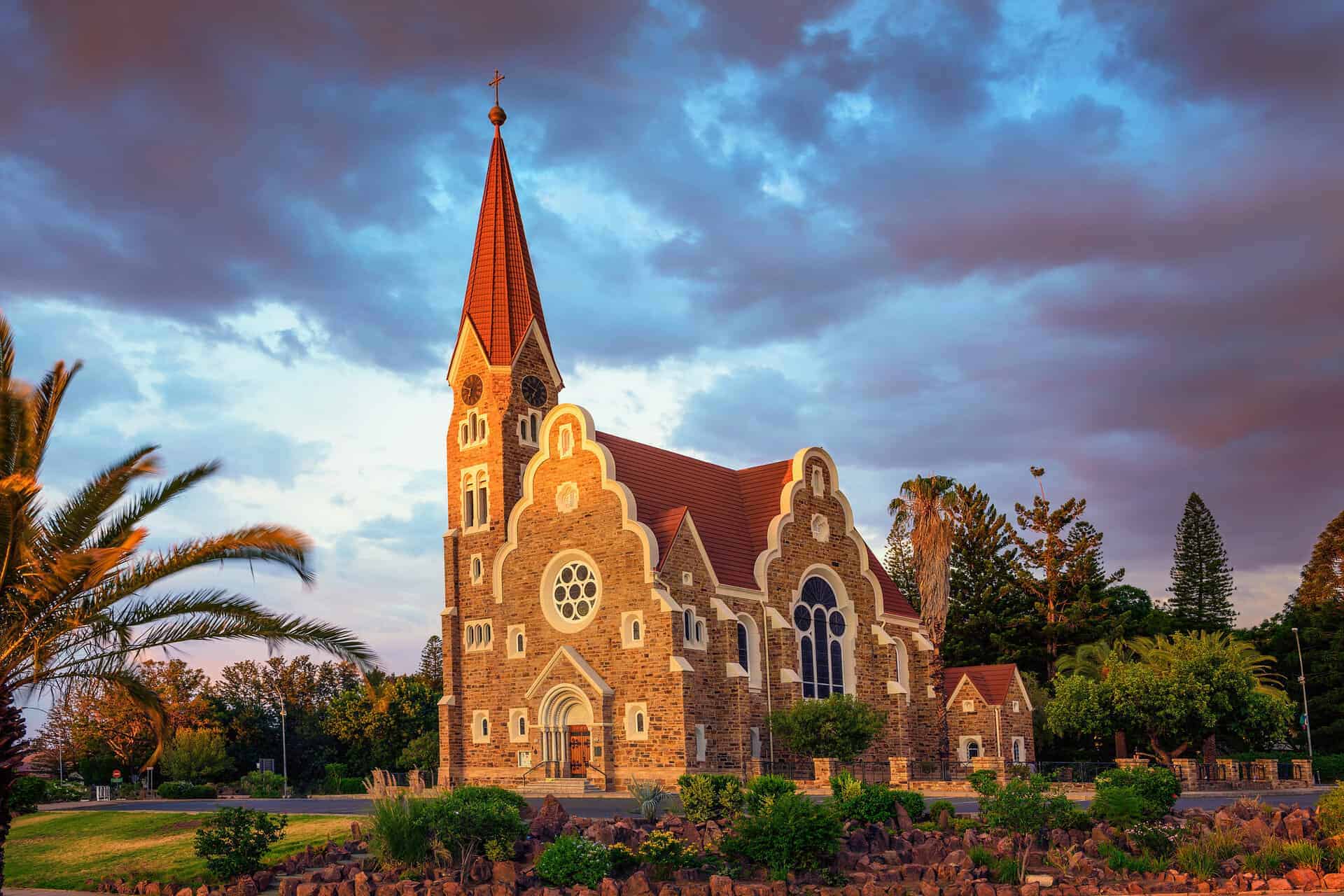
Below it sits the Alte Feste, the city’s oldest surviving structure. Once a military outpost, it now stands as a reminder of contested histories — less a monument than a prompt for reflection.
Nearby, Christuskirche remains one of the city’s most recognisable landmarks. Its presence is architectural rather than symbolic, marking Windhoek’s layered past without dominating its present.
The Windhoek Railway Station houses a preserved early-1900s locomotive, a reminder of the rail line that once linked the interior to the coast and shaped patterns of trade and movement.
For locally produced crafts, the Namibia Craft Centre on Tal Street offers a quieter encounter with Namibian creativity. Jewellery, textiles, and sculptural pieces reflect both tradition and adaptation. Bargaining is acceptable, but courtesy defines the exchange.
NATURE & THE CITY’S EDGE

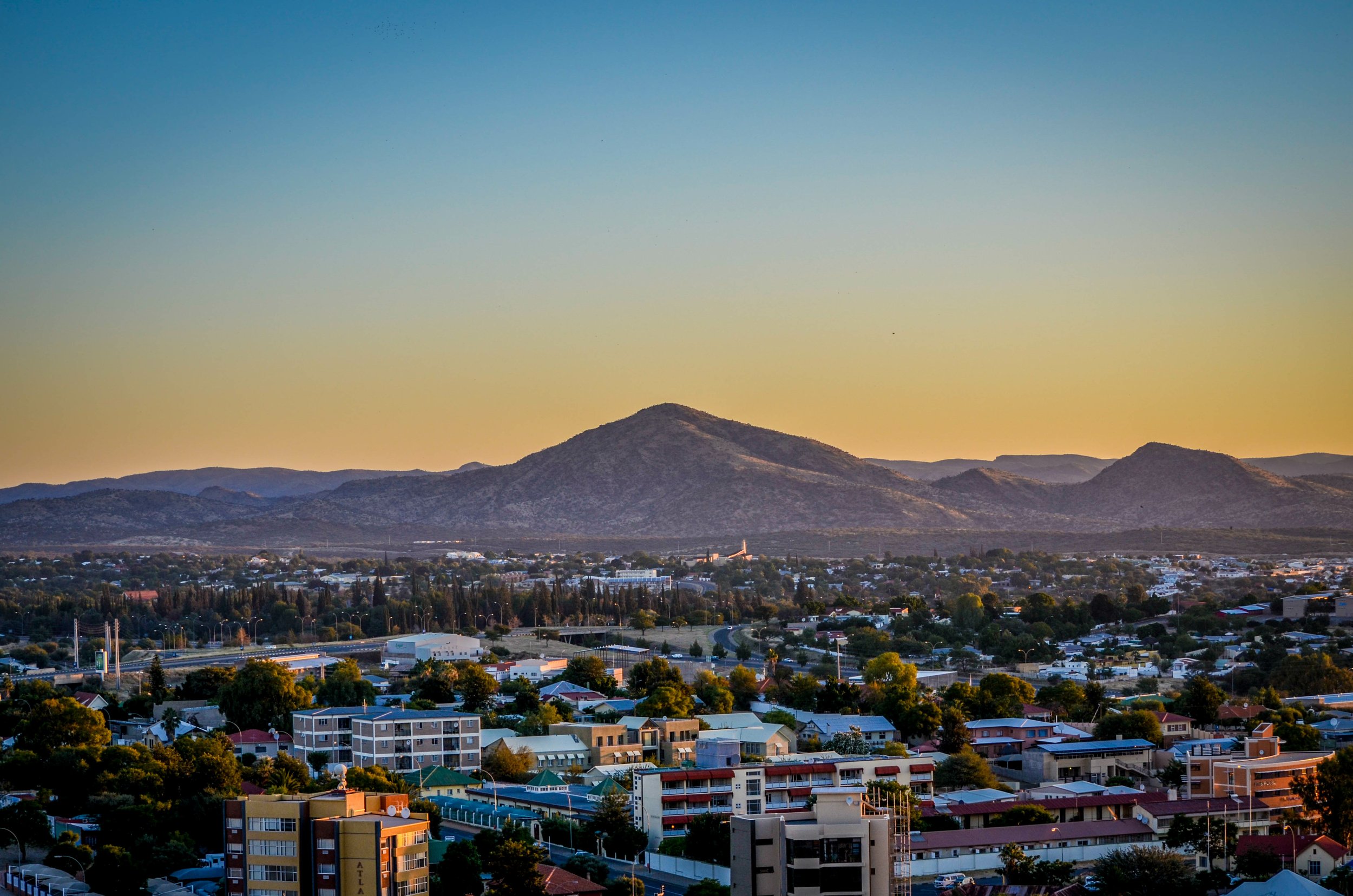
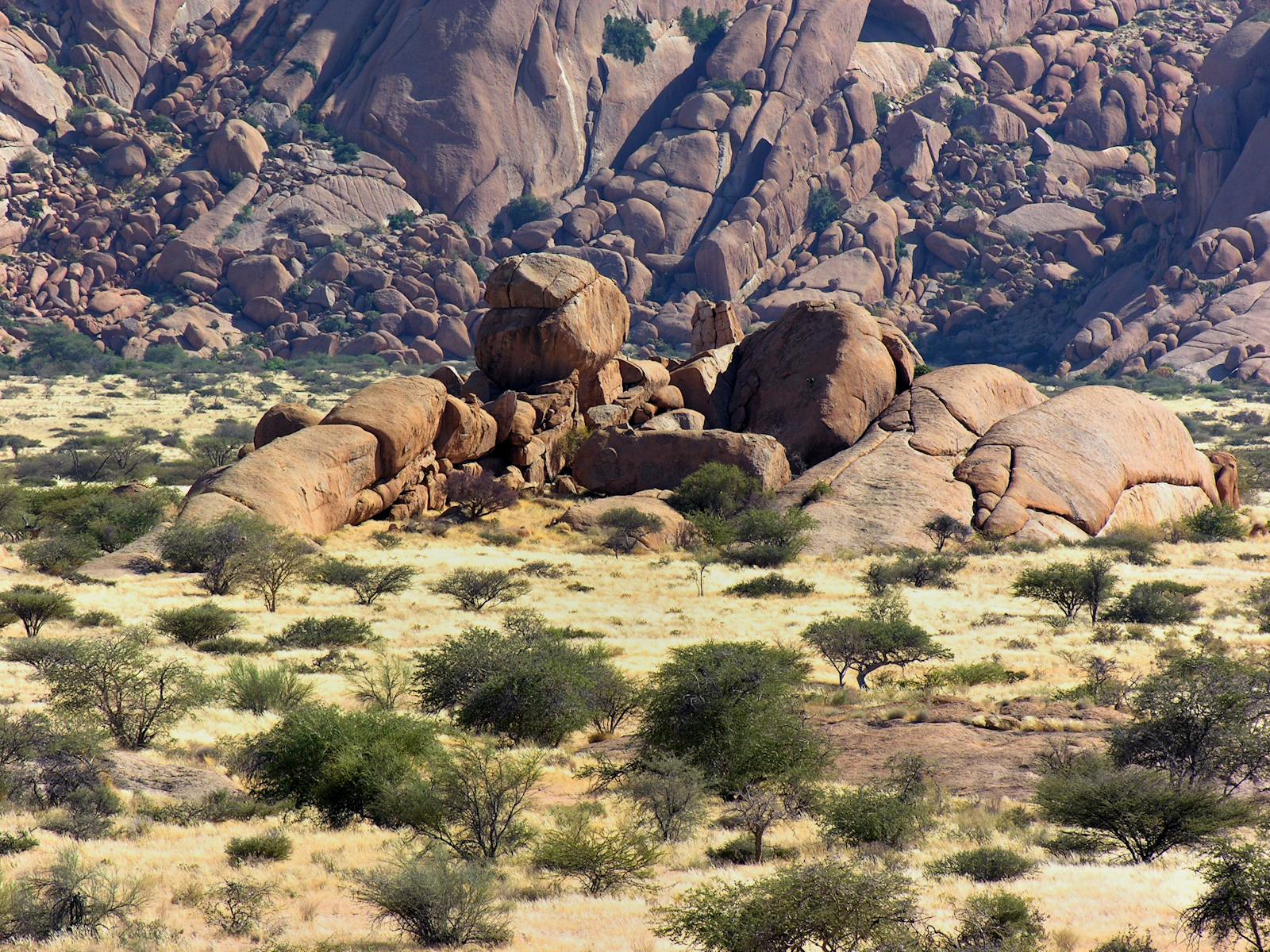
Nature presses close to Windhoek. The city ends quickly, giving way to open land and game reserves.
Okapuka Ranch, roughly 30 kilometres north of the city, offers a condensed view of Namibia’s wildlife — giraffe, zebra, antelope, rhino, and prolific birdlife. It reflects how conservation is not peripheral here, but integrated into the country’s spatial reality.
EATING OUT & LOCAL FLAVOURS (UPDATED)
Windhoek’s food culture mirrors its history: German influence sits alongside Southern African tradition, with newer contemporary dining slowly emerging.
Local staples such as potjiekos, kapana, and fat cakes remain part of everyday eating, particularly in informal settings. Mopane worms continue to appear in traditional preparations, more common in local markets than restaurants.
Joe’s Beerhouse remains a reliable constant — informal, social, and rooted in game-meat traditions. Its longevity speaks to Windhoek’s preference for familiarity over reinvention.
For more contemporary dining, The Stellenbosch Wine Bar & Bistro has become a steady presence, combining Namibian produce with European technique in a restrained setting.
Café culture continues to grow around central Windhoek, with spots such as Slowtown Coffee Roasters reflecting a gradual shift toward casual, daytime social spaces rather than destination dining.
NIGHTLIFE & AFTER-DARK RHYTHM
Evenings in Windhoek unfold without urgency.
The Skybar at Hilton offers a measured transition from day to night, valued as much for its view as its atmosphere.
For late-night energy, Vibe Nightclub remains a familiar fixture, drawing a crowd intent on dancing rather than spectacle.
ACCOMMODATION
Windhoek’s accommodation landscape favours guesthouses and smaller lodgings, many offering a more personal experience.
For business stays, Avani Windhoek Hotel & Casino remains centrally positioned within the Gustav Voigts Mall, while the Hilton Windhoek, located across the road, provides comparable comfort and city views.
CITY TIPS & HINTS
• Comfortable footwear and sun protection are essential
• Heat can be intense; pace matters
• Bargain politely at markets
• Private taxis are the most reliable transport; book ahead
• Windhoek is generally safe, but remain attentive at night
SENSE OF PLACE
Windhoek does not demand attention. It offers clarity instead — a capital shaped by restraint, history, and proximity to open land. To move through it is to understand Namibia’s temperament: measured, observant, and grounded in balance.