
About City
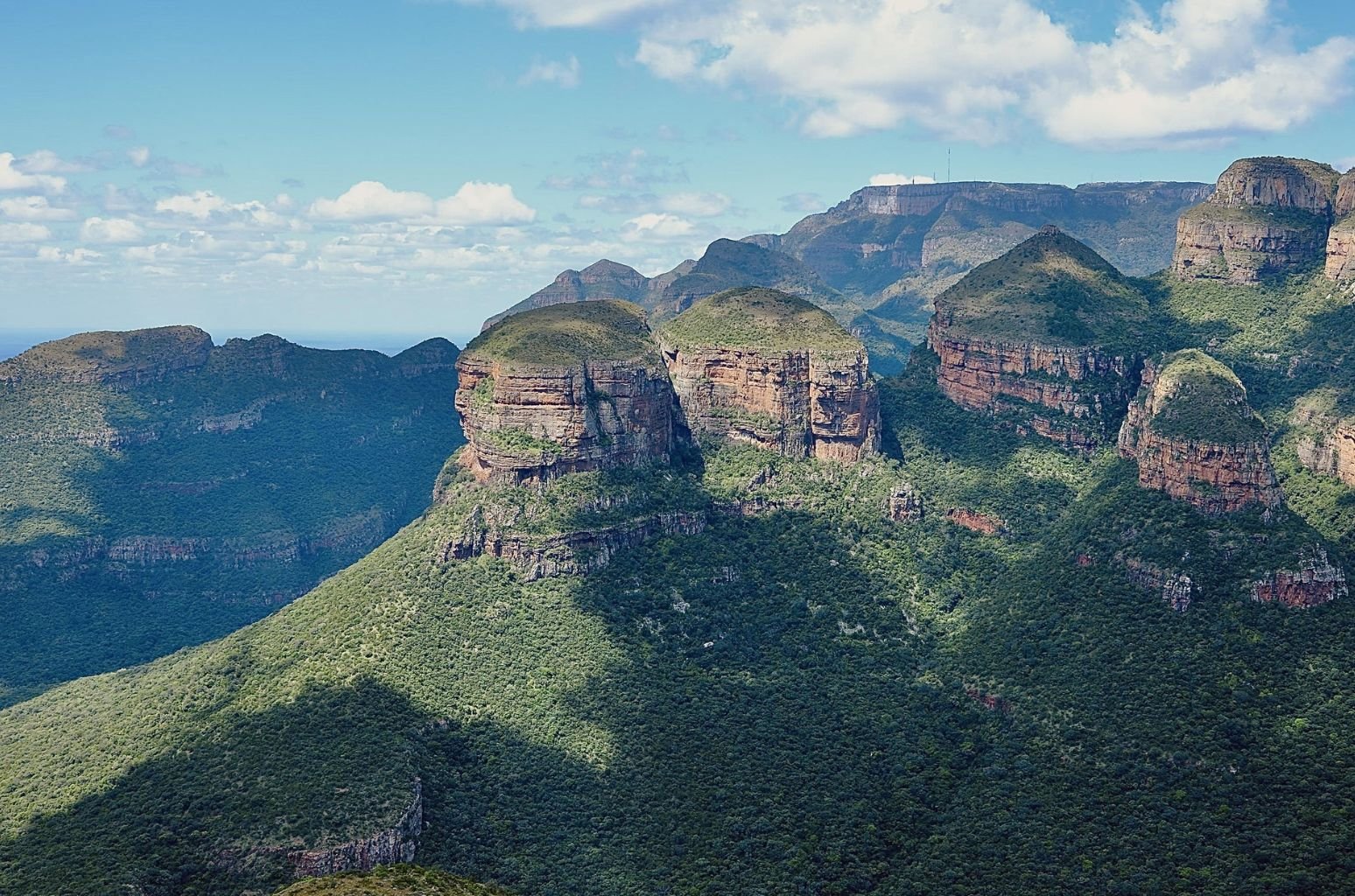
There is a moment, somewhere between the Drakensberg escarpment and the first breath of lowveld air, when time stops pretending. The canyon drops away beneath you green and ancient and indifferent to your arrival and the horizon fills itself with a silence so complete it feels almost sacred. You have been here before. Not in this life, perhaps, but in the cellular memory of a species that once looked at this same sky and understood, without language, that beauty was not decoration. It was instruction.
This is Mpumalanga. The place where the sun rises.
And it rises differently here. The escarpment catches the first light before the rest of South Africa is awake, gilding mist over valleys that predate the dinosaurs, casting long amber shadows across rock formations two billion years in the making. The Blyde River cuts its slow, ancient path through stone. The fig trees hold their ground above everything. In Mpumalanga, the landscape does not perform for visitors. It simply continues, as it always has enormous, patient, alive.
The Earth’s Memory
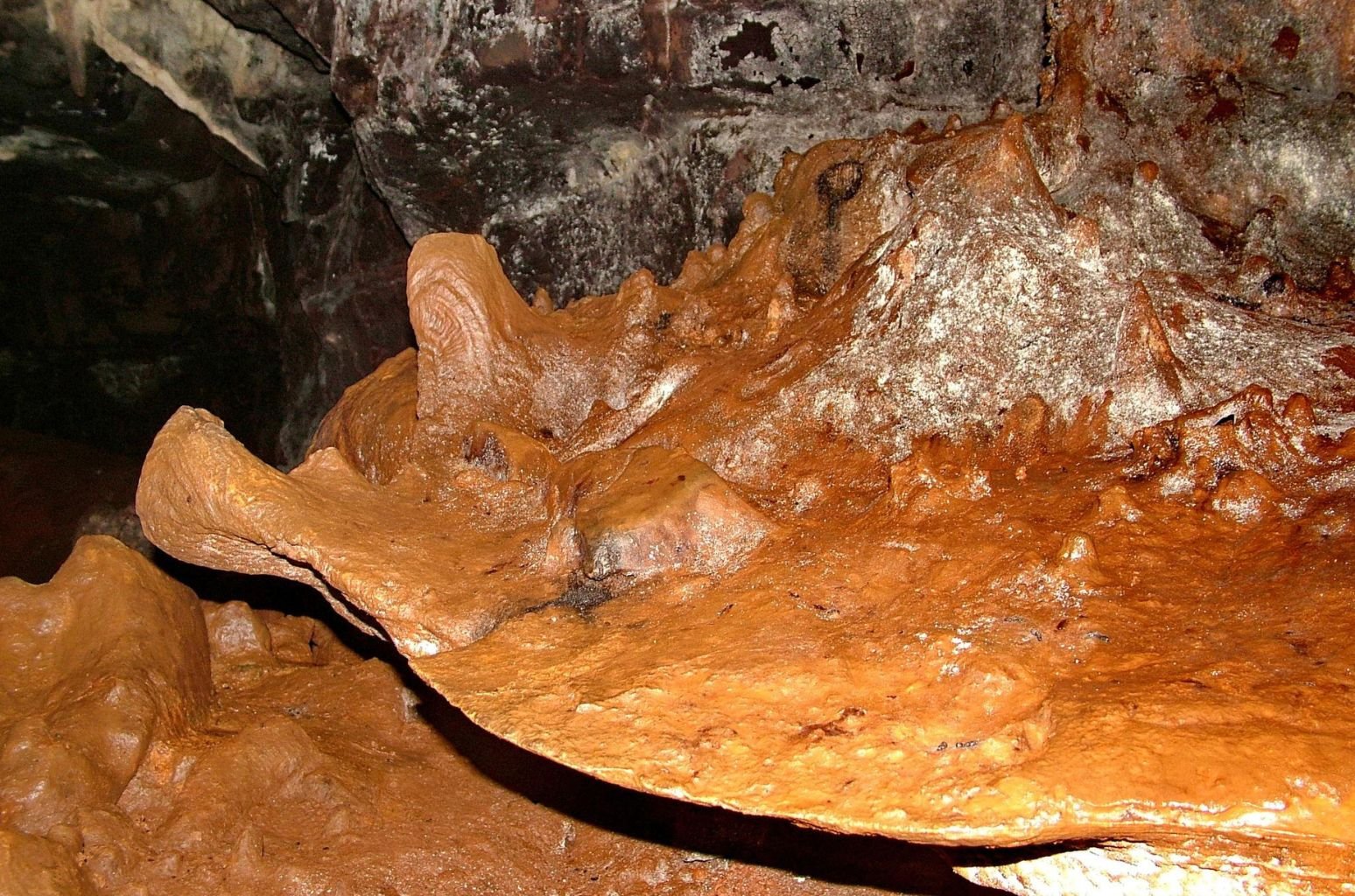
Mpumalanga is not a place of recent history. Its oldest rocks formed during a geological era so remote that human civilization, with all its monuments and ambitions, registers as barely a blink. The Sudwala Caves, carved by the slow insistence of dolomite dissolution over hundreds of millions of years, descend 150 metres into darkness, their chambers vast enough to swallow sound whole. The constant temperature of the caverns regulated by air currents whose origin remains a genuine scientific puzzle speaks to a world governed by forces beyond human engineering.
The Blyde River Canyon, one of the largest green canyons on the continent, was carved by the same river whose name translates simply as joy. The name was given by Voortrekker settlers in the nineteenth century, though the land itself had known human habitation long before them. The Pedi and Swazi peoples, among others, understood this terrain intimately its rhythms, its resources, its spiritual weight. What arrived later gold rush, colonial boundary-drawing, the grinding machinery of segregation did not erase that older knowing. It persists in the place names, the ceremony, the way local communities still orient themselves by the shape of the hills.
The provincial capital, Nelspruit, sits at the convergence of several provincial borders and two national frontiers. Mozambique is close enough that the Indian Ocean feels ambient in the air. Eswatini formerly Swaziland begins without fanfare. This is a borderland in the truest sense: a place where languages, traditions, and ecologies meet and negotiate.
The Province in Motion
Mpumalanga moves at the pace of its landscape. Unlike the frenetic commerce of Johannesburg or the coastal velocity of Durban, life here is calibrated to something older — the game path, the seasonal flood, the long suspension of late afternoon light over the escarpment.
The creative economy is quiet but present. Local artisans work leather, bone, and semi-precious stone into objects with genuine craft behind them — not factory souvenirs, but things that carry the fingerprints of their making. Ostrich leather goods, hand-tooled and close-stitched, sit alongside jewellery set with stones pulled from the same ancient earth beneath your feet. The Tsinini Silk Farm, where silkworms are cultivated in conditions that transform a humble larva into something extraordinary, produces textiles of an improbable softness — pashminas and garments that feel like a different category of material entirely.
The food at the luxury game reserves follows the logic of the landscape: game meat prepared with European technique, bush vegetables given French treatment, braai smoke rising into night air that carries the distant sound of something moving in the dark. It is not fusion in the careless sense. It is a table set at the intersection of worlds, which is, after all, what South African cuisine has always been.
The nightlife in Mpumalanga is not found in clubs or cocktail bars. It exists in the hours after the kitchen closes, when guests gather around the boma — the open fire pit that is the oldest form of African gathering — and the darkness beyond the camp perimeter holds sounds that the body recognises before the mind does. A lion’s cough at distance. The hyena’s conversation. The bush at night is a theatre that no human architect could rival, and the admission is simply the willingness to sit still and listen.
The Signature Experience
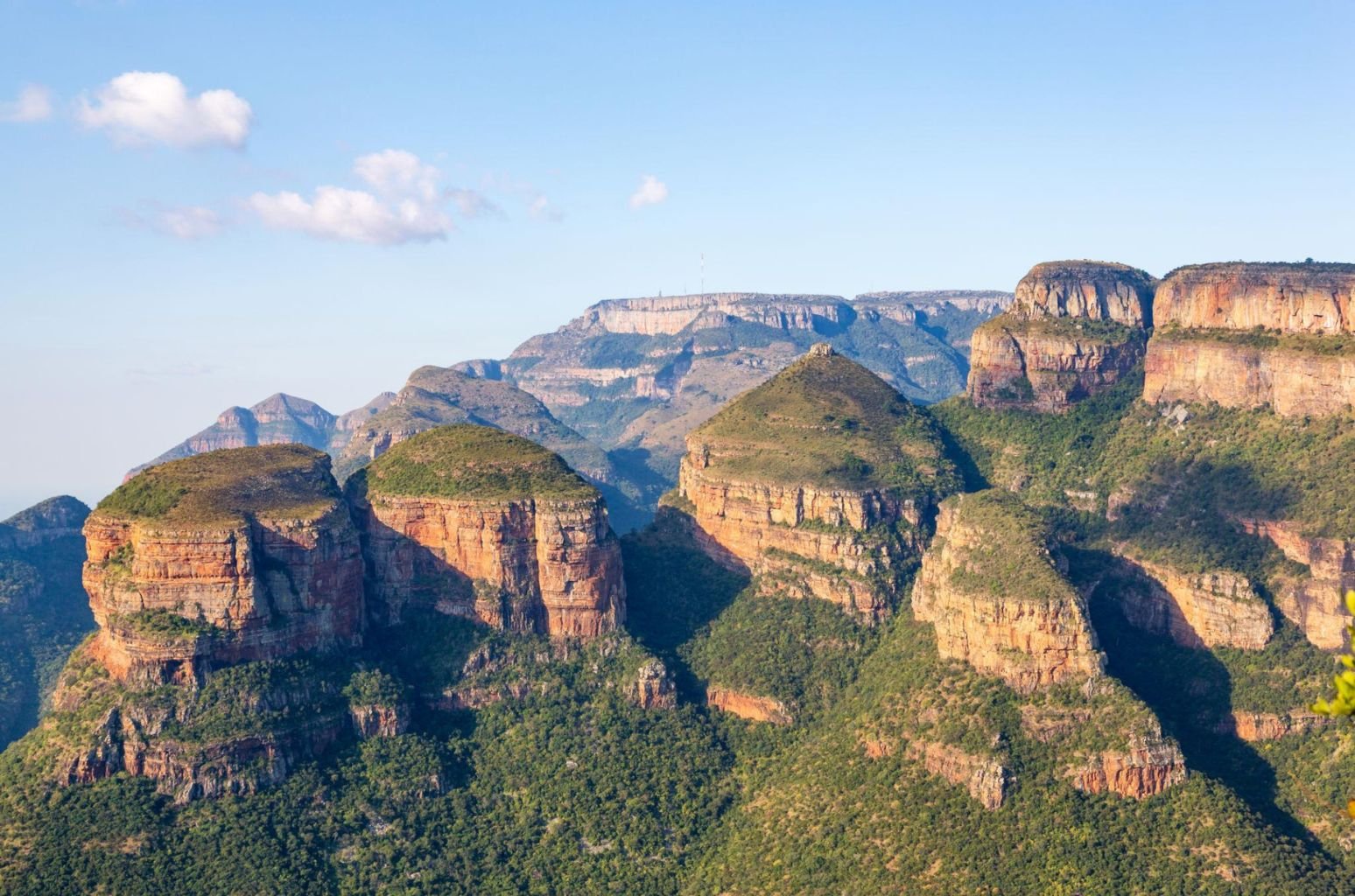
The Panorama Route — the road that links God’s Window, Mac Mac Falls, the Three Rondavels, and the lip of the Blyde River Canyon — is Mpumalanga’s defining geography. But it is not the viewpoints themselves that define the experience so much as the quality of attention they demand.
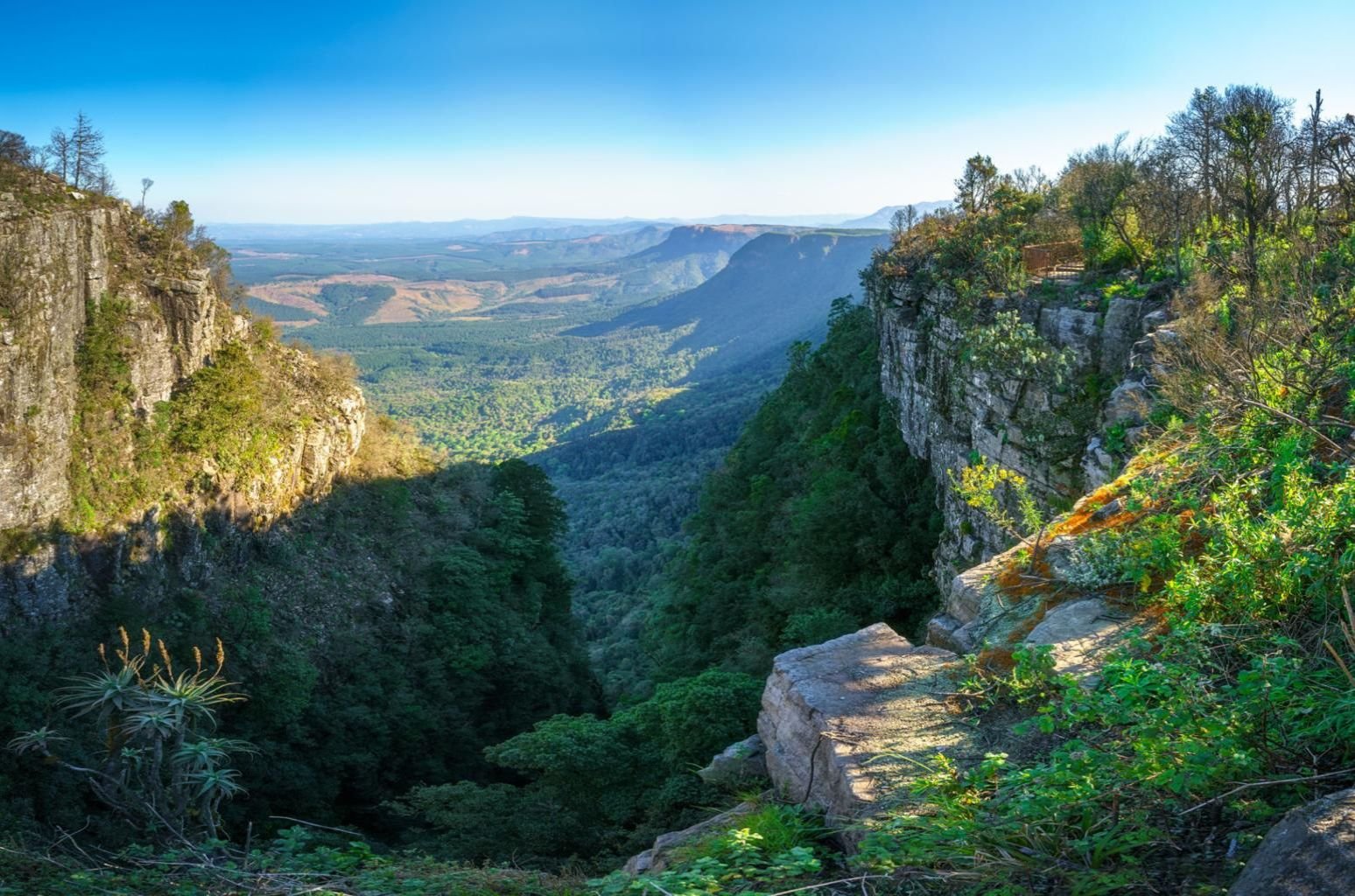
God’s Window earns its name. Standing at its edge, with the Lowveld spread 900 metres below and cloud moving at eye level, produces a particular species of vertigo — not fear, but scale. A reckoning with proportion. The human body feels briefly, valuably small.
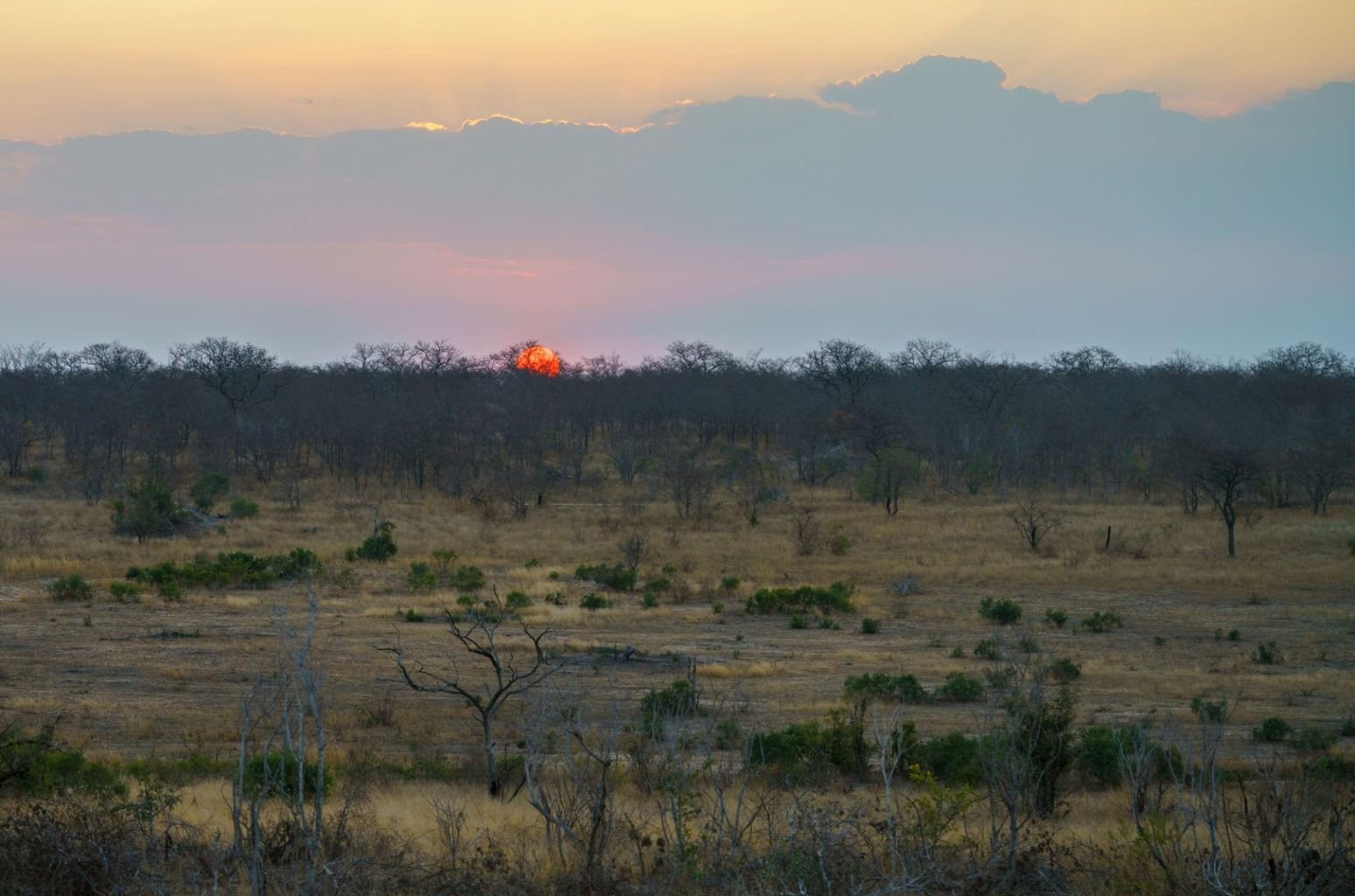
The Sabi Sand Game Reserve and its neighbour, Kruger National Park, represent Africa’s most complete megafauna ecosystem outside of East Africa. The Big Five move through this landscape without regard for the vehicles that track them. A leopard in a marula tree is both thrilling and ordinary here — ordinary in the sense that this is simply its life, and extraordinary in the sense that you are permitted, briefly, to witness it.
What Mpumalanga does differently from other safari destinations is the layering. The geological spectacle is not separate from the wildlife experience, which is not separate from the artisan economy, which is not separate from the cultural context of borderland South Africa. These things sit inside each other like geological strata — each layer revealing something about the ones below.
The Light Changes
Leave Mpumalanga and you carry it in a specific kind of silence. Not the silence of emptiness but the silence of fullness — the kind that comes after exposure to something larger than your capacity to immediately process.
There is an old Sotho understanding that the land holds the memory of everything that has ever happened on it. The rivers know. The rocks know. The morning light, spilling over the escarpment each day as it has done for two billion years, is not indifferent to the fact of your standing in it. It is simply older than your wonder. And it was here, waiting, long before the word for beauty existed in any language.
You leave having arrived, which is not a contradiction. It is the whole point.