Some conditions do not arrive suddenly.
They are carried quietly folded into lineage, pressed into memory, whispered through generations long before a child learns their own name.
Sickle cell disease is one such inheritance.
Across much of Africa and its global diaspora, it is not only a medical condition but a lived rhythm shaping childhoods, interrupting futures, demanding resilience where ease should have lived. To understand it is not merely to understand biology; it is to listen to the body as an archive.
Where the Blood Learns Its Shape
Blood is movement.
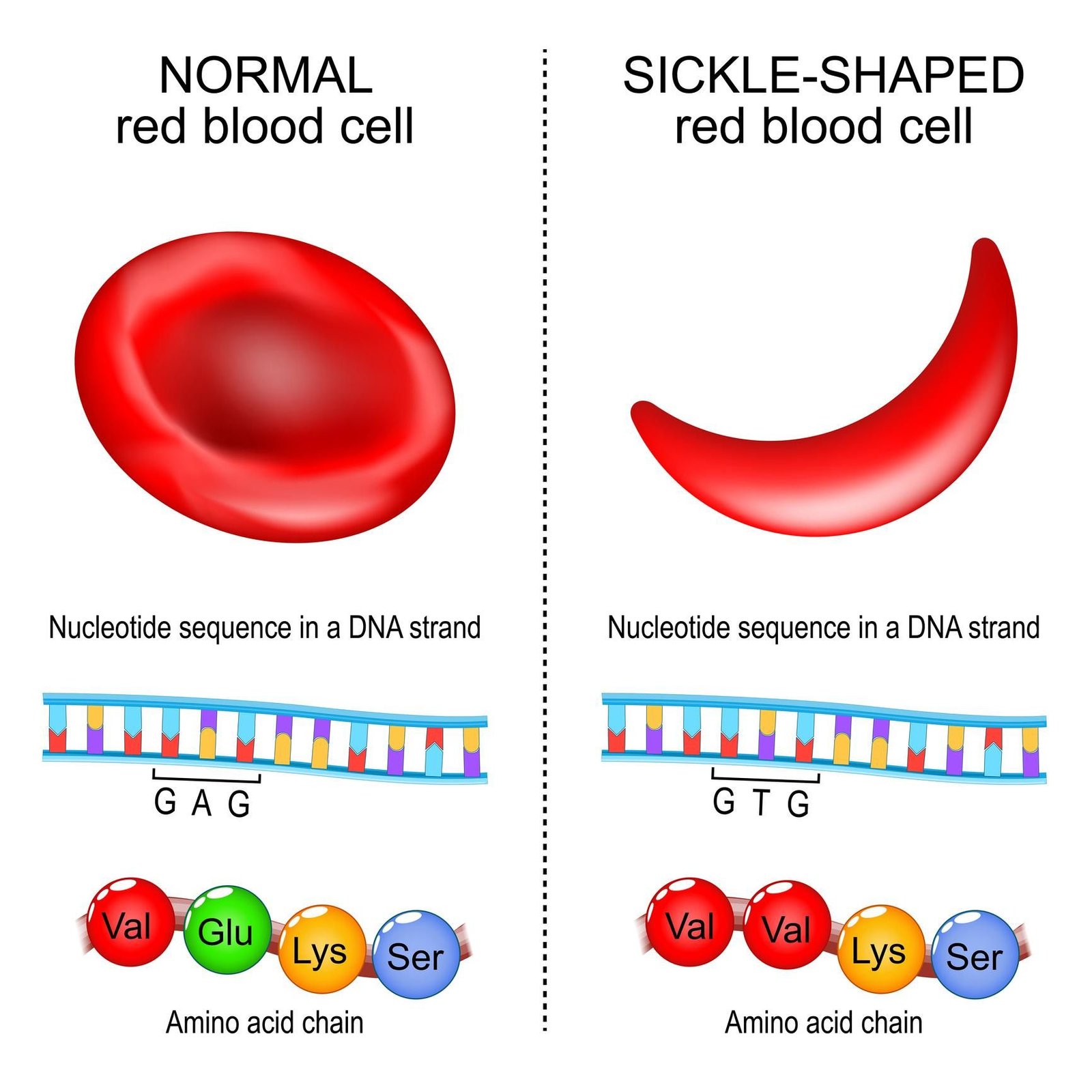
In a healthy body, red blood cells travel like well-rounded travellers, smooth, flexible, and able to pass through even the narrowest pathways. Their task is simple and constant: carry oxygen, sustain life, keep the body in motion.
But in sickle cell disease, this motion falters.
Under certain conditions, red blood cells lose their roundness. They bend inward, collapsing into rigid, fragile crescents, resistant to passage. These altered cells struggle through the body’s smallest vessels, slowing circulation, blocking flow, denying tissues the oxygen they depend on.
What follows is not a single event but a cycle.
Pain feeds stress. Stress encourages further sickling. The body, deprived, tightens in response, and the rhythm breaks again.
When Pain Becomes a Language
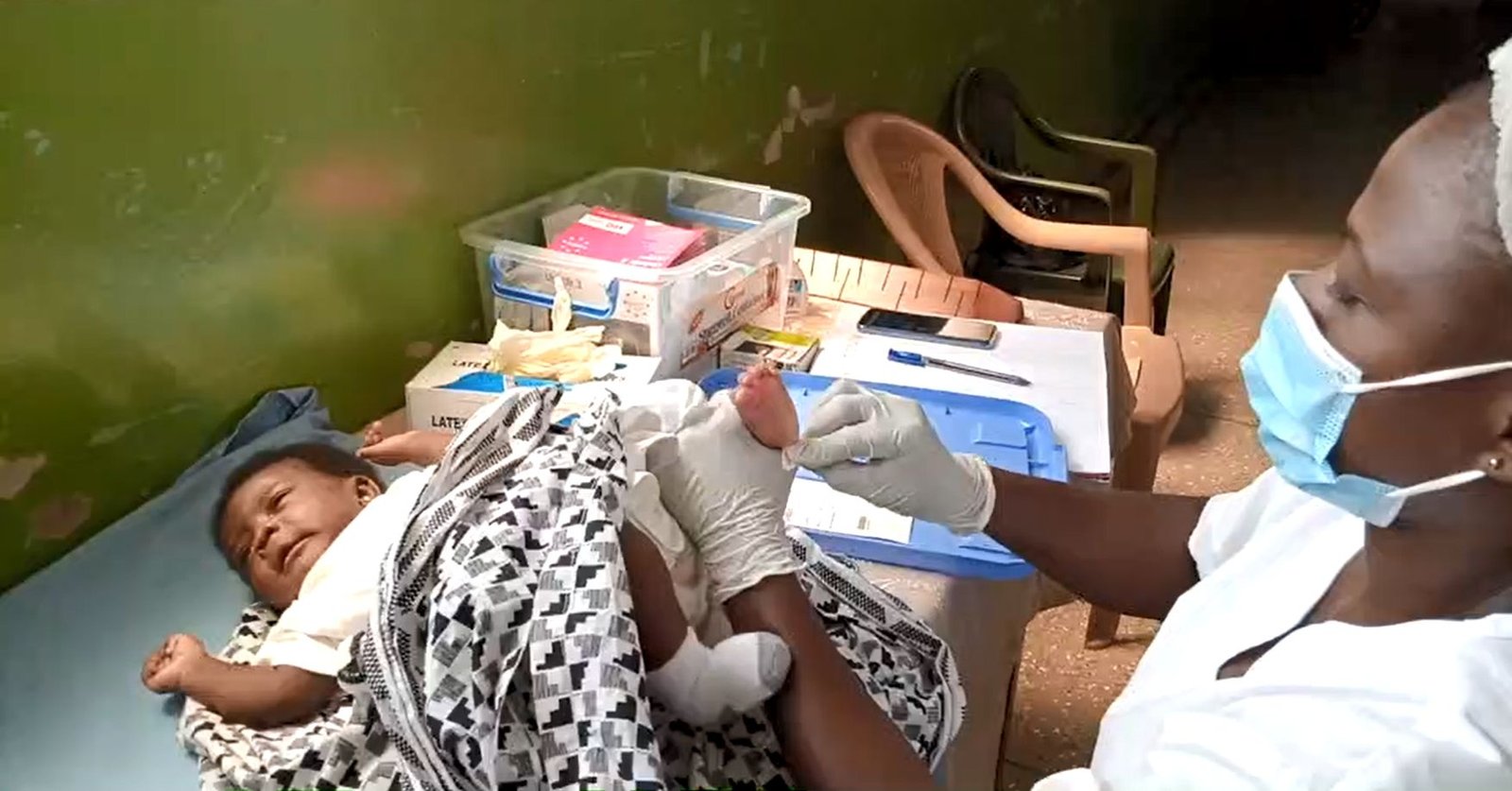
Sickle cell disease does not announce itself in the same way in everybody.
For some, its presence is quiet for years. For others, it arrives early and often unpredictable, episodic, unrelenting. Even within an individual, its expression can change from season to season and year to year.
Common experiences include:
- Chronic anaemia occurs when fragile sickled cells break down faster than the body can replace them
- Recurrent pain episodes, caused by interrupted blood flow to bones and organs
- Swelling of the hands and feet is often among the earliest signs in childhood
- Increased vulnerability to infections, as the immune system strains under pressure
- Delayed growth, where the body’s resources are diverted toward survival
- Abdominal swelling, sometimes signalling stress on vital organs
Sure signs of extreme body heat, neurological symptoms, and sudden weakness demand immediate medical care. These are moments when the body speaks urgently, without metaphor.
Inheritance Without Choice
Sickle cell disease is not acquired by environment or behaviour.
It is inherited.
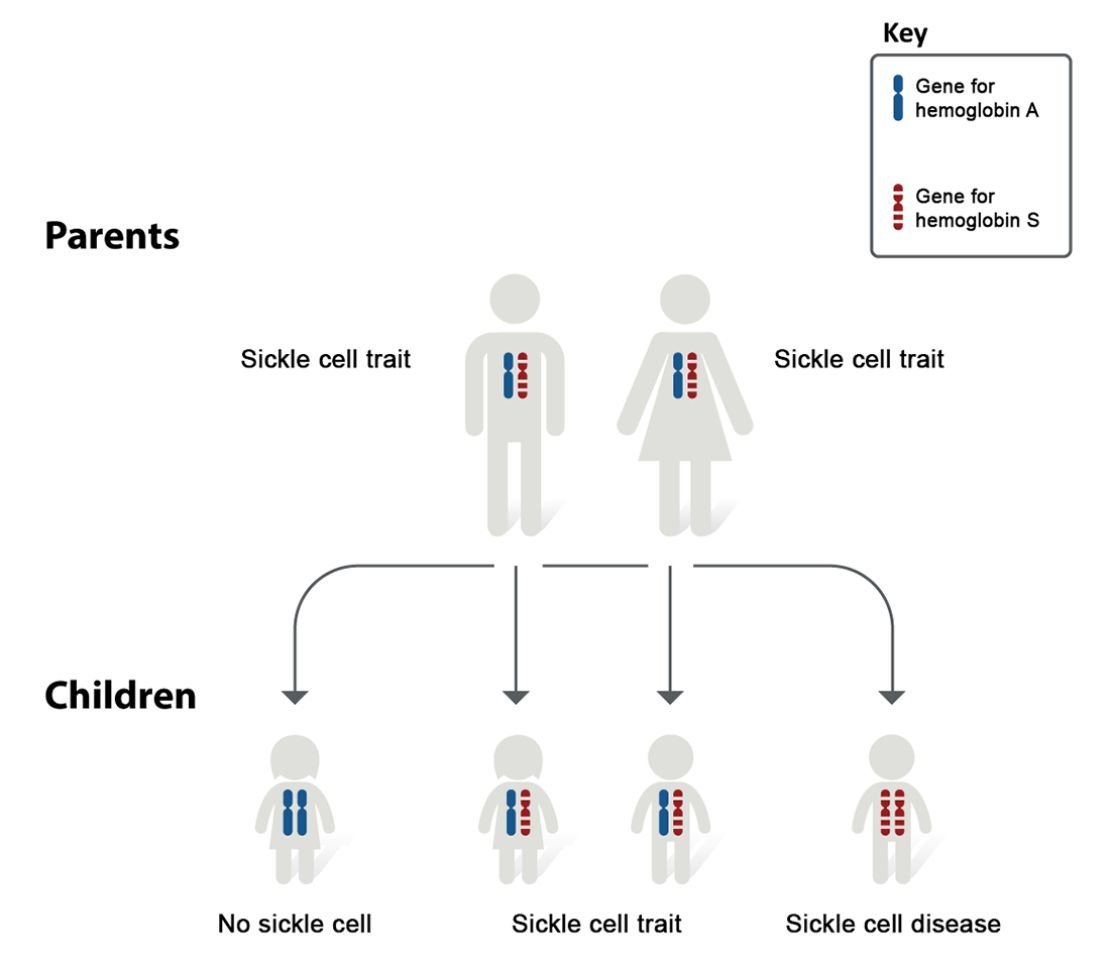
It emerges when a child receives two altered haemoglobin genes, one from each parent. In this form, haemoglobin cannot maintain the structural integrity of red blood cells under everyday physiological stress.
Some parents live without symptoms, unaware they carry one normal and one altered gene. They are known as carriers, or individuals with sickle cell trait. Their bodies function normally, yet the inheritance remains present, dormant, but transferable.
When two carriers have a child, a possibility enters the room:
- A child may inherit two normal genes, remaining unaffected
- A child may inherit one normal and one altered gene, becoming a carrier
- Or a child may inherit two altered genes, developing sickle cell disease
No outcome is chosen. None is deserved. Biology does not negotiate.
Living With What the Body Carries
To live with sickle cell disease is to learn to be attentive to temperature, hydration, rest, and stress. It is to recognise early signs and protect the fragile balance. It is to endure pain that cannot always be seen, measured, or easily explained.
Yet survival alone is not the whole story.
Across Africa and the diaspora, people with sickle cell disease grow, love, build families, build careers, and claim joy not because the condition is small, but because the human spirit refuses to be reduced.
As one African proverb reminds us: the river does not forget its source, even as it flows forward.
The Final Pulse
Sickle cell disease reminds us that the body remembers where it comes from, even when that memory comes at a cost.
It calls for science, care, policy, and compassion. But it also calls for listening to pain without spectacle, to resilience without romanticism, to lives lived fully in bodies that demand more from their keepers.
The blood moves.
The story continues.