
Lekki Conservation Centre



Address
Km 19, Lekki-Epe Expressway, Lekki Peninsula, Lagos, Nigeria
Timezone
Africa/Lagos — West Africa (WAT)
Find Your Footing
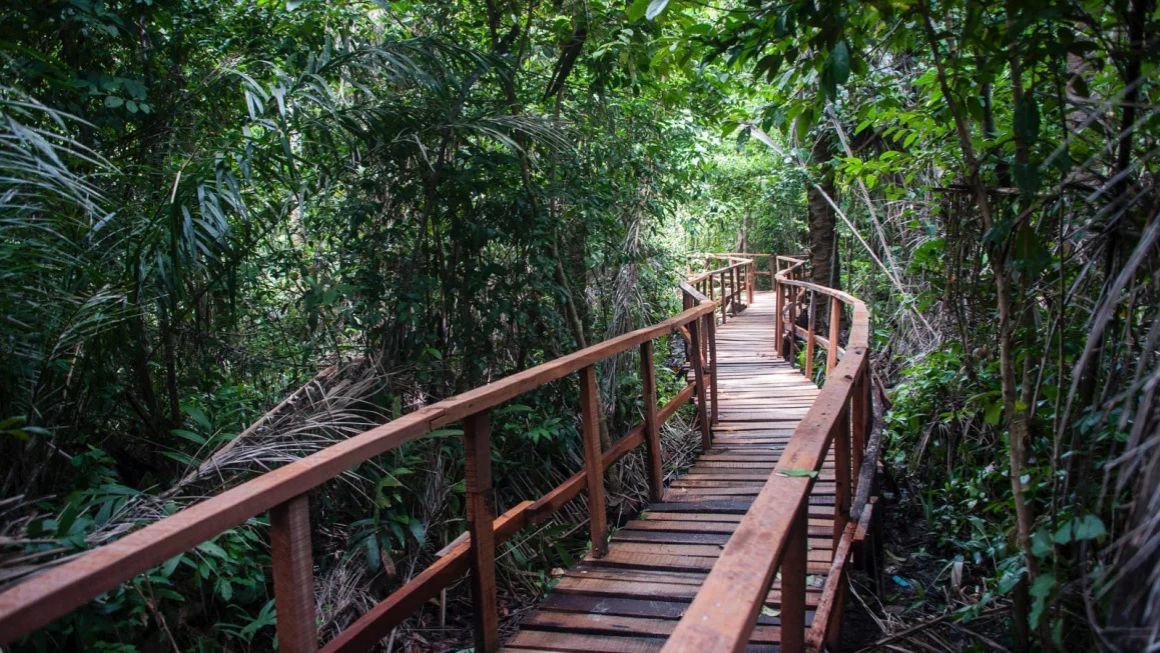
The Lekki Conservation Centre does not reward urgency. Come with the understanding that this is not a park in the Western sense; it is a managed remnant of what the peninsula once was in its entirety. Move slowly through the entrance boulevard of coconut palms; the shift from asphalt to earth happens before you expect it. The main trails follow a figure-of-eight system, easy to navigate without a guide, though the guides who work here carry knowledge that maps cannot convey. The canopy walkway, 401 metres, Africa's longest, is the structural heart of the experience, but it is not the emotional one. That honour belongs to the quieter trails through the swamp, where the light fractures differently and time moves on its own schedule. Morning visits before 10 AM give you the reserve at its most generous: cooler air, active bird populations, and a quality of silence that Lagos rarely offers. Weekends draw families and school groups. If solitude matters, arrive on a weekday.
About City
Just beyond the steady roar of the Lekki Epe Expressway, the atmosphere shifts. Lagos does not disappear entirely; the distant rhythm of traffic still carries through the trees, but the layered urgency of the city softens. What replaces it is a quieter register of movement: leaves working against the canopy, birds crossing the swamp air, water moving slowly through wetlands that have existed far longer than the city now pressing against them.
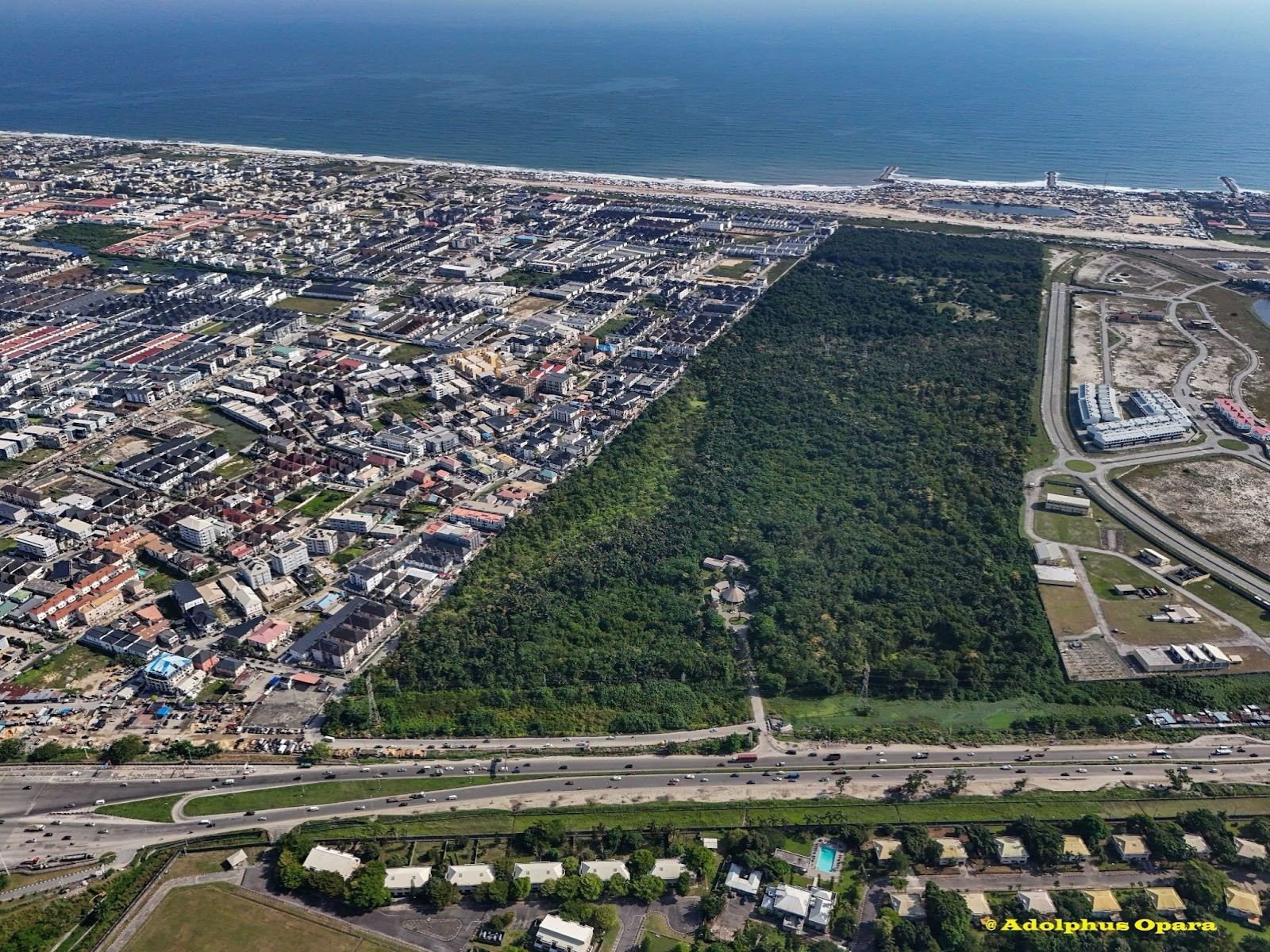
The Lekki Conservation Centre occupies seventy-eight hectares of protected wetland on the Lekki Peninsula, one of Lagos’s fastest-developing corridors. Established in 1990 by the Nigerian Conservation Foundation with land and initial support from Chevron Corporation, the reserve represents one of the city’s most enduring environmental interventions. Long before the surrounding estates and commercial infrastructure arrived, this stretch of land formed part of a wider coastal ecosystem linking the Lekki Lagoon to the Lagos Lagoon. Much of that landscape has since given way to development; the conservation centre preserves a fragment of what once defined the peninsula.
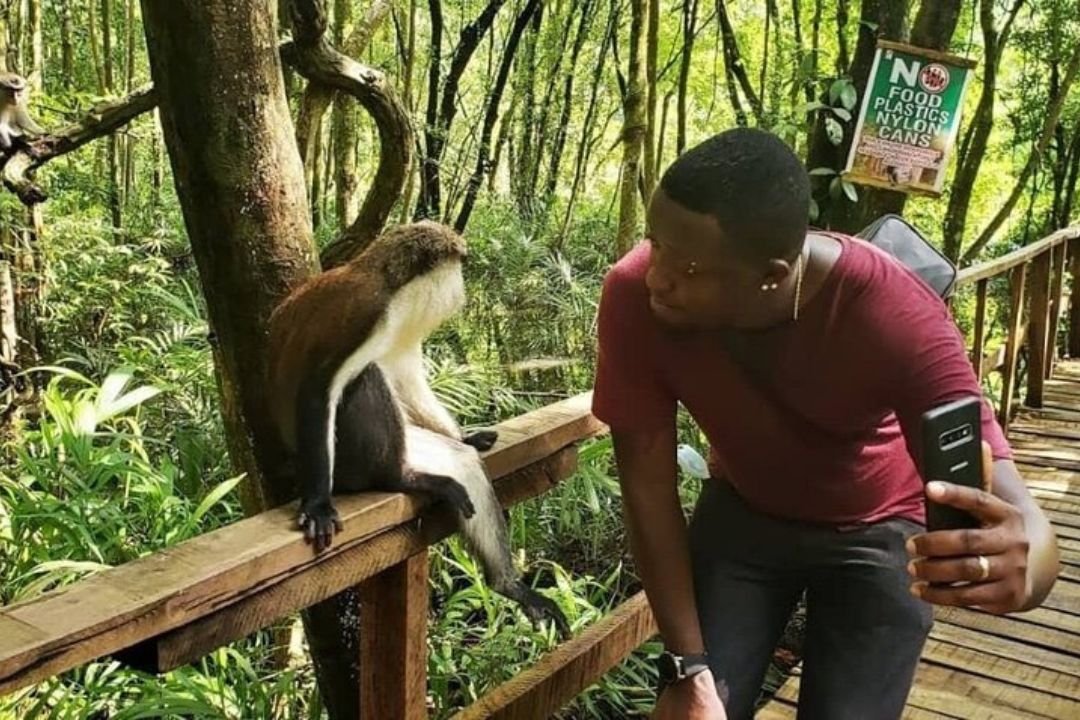
The reserve’s terrain ranges from swamp forest and mangrove wetlands to open savannah patches. Trails wind through these habitats, revealing a coastal ecology that still supports considerable biodiversity. Bushbucks, Maxwell’s duikers, crocodiles, monitor lizards, and several monkey species inhabit the reserve, while more than three hundred plant species form the structural foundation of the landscape. Mangroves line the waterways, stabilising the shoreline and sustaining fish nurseries within the broader watershed.
One of the centre’s defining features is the canopy walkway, a 401-metre suspended bridge system completed in 2015. Rising roughly twenty-two metres above the forest floor, the walkway crosses six towers connected by rope-and-cable bridges that sway gently with each step. The experience offers a rare vantage point across the peninsula’s remaining green canopy, where the scale of the ecosystem becomes visible against distant lagoon water and a city skyline that seems, for a moment, theoretical.
The character of the reserve changes through the day. Early mornings belong largely to the birds and the quieter movements of wildlife before the city’s traffic has fully gathered itself. Later in the morning, particularly on weekends, the reserve becomes a social space as Lagos families, school groups, and visitors arrive to explore the trails and open lawns. This dual role is intentional. From its founding, the Nigerian Conservation Foundation positioned the site not only as a protected habitat but also as a place where Lagos residents could develop a relationship with the ecosystems surrounding their city.
Beyond the walkways and observation points, the reserve also functions as a conservation education centre. Rangers guide visitors through the ecological relationships that sustain the wetlands, explaining plant uses, animal behaviours, and the role mangrove systems play in protecting coastal environments. The reserve therefore operates as both a living ecosystem and a site of knowledge transmission.
Today, the Lekki Peninsula surrounding the reserve has become one of Lagos’s most heavily developed districts. Residential estates, commercial projects, and expanding infrastructure continue to press outward across land that was once wetland. Within this context, the Lekki Conservation Centre stands as a deliberate boundary, a place where the city chose, at least once, to preserve a portion of the landscape it grew from.
Seen this way, the reserve is not separate from Lagos but deeply reflective of it: a reminder that the same city capable of relentless expansion can also sustain a space dedicated to ecological continuity.